
As an Athlete, do you face
these problems?
- Do you train hard but don’t get the results?
- Does your mind let you down?
- Do your nerves overcome you?
- Do your competitors intimidate you?
- Does your anger stop you from winning?
- Do you lose because of little mistakes?
- Do your negative thoughts hurt you?
- Is your mindset a mess?
- Do you find it hard to bounce back?
- Do you find your results are not consistent?
- Are you a talented athlete but your negative mindset hurts you every day?
- Is your mindset like quicksand that drags you down?
- Does it stop you from winning and performing at your best?

Areas you can get help with to compete and dominate at the very highest levels of your Sport…
“At the elite level, its 80% mind and 20% body. At the top in any sport, the most successful athletes are not only physically talented, they have the mindset of a champion.”
- Positivity
- Motivation
- Best Self
- Focus & Concentration
- Nerves & Anxiety
- Team cohesion
- Peak Performance Planning
- Bounce back
- World class attitude
- Champions Body Language
- Mastering your reactions
- Consistency
- Cutting Edge Mindset
- ‘Mind Hacking’ techniques
- Mind Game plans
- Mindset skills, strategies and procedures
- Visualisation & visual assimilation
- Mindfulness
- Emotion management
- Deal with pressure
- Creating Positive team environments
- Competition & Game day Systems
- Goals, targets & trackers
- Sports Growth Mindset
- Self belief, Trust and Faith
- Confidence
- Champions systems, processes and SOPs
- Mindset simulation in training
- Reflection & Projection
The Key Mindset Challenges in Gymnastics & Aerobics

Competition nerves – the adrenaline response that disrupts the automatic execution of complex skills

Dealing with a fall or error mid-routine – the mental recovery required to continue well

Fear-based errors – the mental hesitation that turns a routine skill into a fall or bail

The pressure of team competitions – performing for teammates as well as yourself

Consistency between training and competition performance

Body image and self-confidence in an aesthetically judged sport

Managing scores and judge awareness – performing rather than performing for judges

Injury management – the mental challenge of returning to skills that caused injury

Long competition days – maintaining focus across multiple apparatus or multiple rounds

Managing the psychological demands of elite gymnastics culture
The Elite Sport
Mindset Coach
John Novak is widely known as Australia’s No. 1 Sports Mindset Specialist, with his athletes reaching National and International success at World Championships, Olympics and Major Championships.
His athletes include Grace Kim (Evian Championship Winner 2025) and Jake Weatherald (Australian Test Cricket, 2025–26 Ashes). John has published numerous Sports Mindset books and presented across TV, radio and podcasts.
John has worked at the highest levels of professional sport as Mindset Coach for Sydney FC (A-League 2021–2023) and Melbourne FC (AFL 2023). He was previously Head Mindset Coach at Manly Sea Eagles NRL (2019–2022), Canterbury Bulldogs NRL (2012–2017) and Sydney Roosters (2009). He also has been the mindset coach of the Sydney Kings (NBL) and NSW Waratahs (Super Rugby).
He has worked with hundreds of elite athletes and teams in 50+ different sports. His extensive experience in sports mindset is unparalleled.

What John’s Gymnastics & Aerobics Mindset Program Covers

Pre-competition mental routine – building the ideal mental state for each apparatus or event

Visualisation protocols for gymnastics – full routine mental rehearsal that builds competition confidence

Automatic execution – developing the deep confidence that allows skills to run without conscious monitoring
Score compartmentalisation – competing for excellence rather than numbers
Fall recovery – the mental and physical reset required to continue a routine with full commitment after an error
Team competition mindset – the collective energy that supports individual performance

Artistry and expression mindset – performing rather than surviving

Confidence rebuilding after injury – the progressive mental process of returning to skills

The Boomerang Effect in gymnastics: the mental energy of the competition hall and how to work with it
Body positivity and self-worth frameworks appropriate to the demands of judged sport
1+1=3
What happens when you add an Elite Mindset Coach to an Elite Athlete or Team?
John’s proven and tested mindset program has a multiplication effect. He helps the athlete or team achieve results far greater than usually possible.
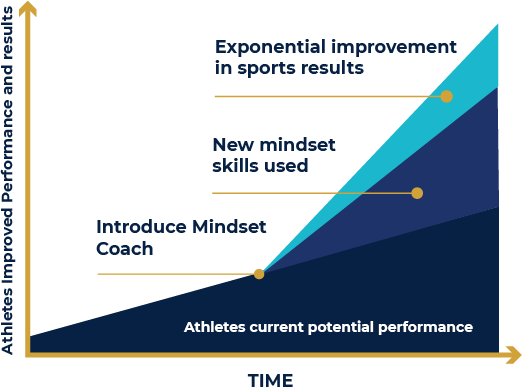
His program has guided athletes and teams to achieve results quicker. His strategies vastly improve your performance to achieve outstanding results.
John’s athletes become leaders going on to captain national teams in a variety of sports. The program is simple, clear and easy to action. This is why his athletes enjoy the multiplication effect.
Every athlete or team John works with develops laser focus on what’s required and how to achieve their targets.
His athletes and teams get the results!

Featured On


How it works?
Even though every athlete requires a tailored mindset program, the formula to fast track success is the same.
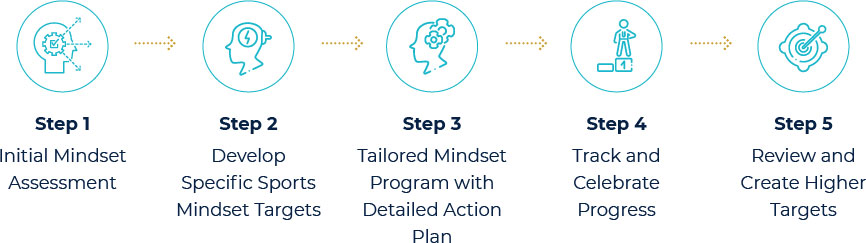

Step 1
Initial Mindset Assessment

Step 2
Develop Specific Sports Mindset Targets

Step 3
Tailored Mindset Program with Detailed Action Plan

Step 4
Track and Celebrate Progress

Step 5
Review and Create Higher Tragets
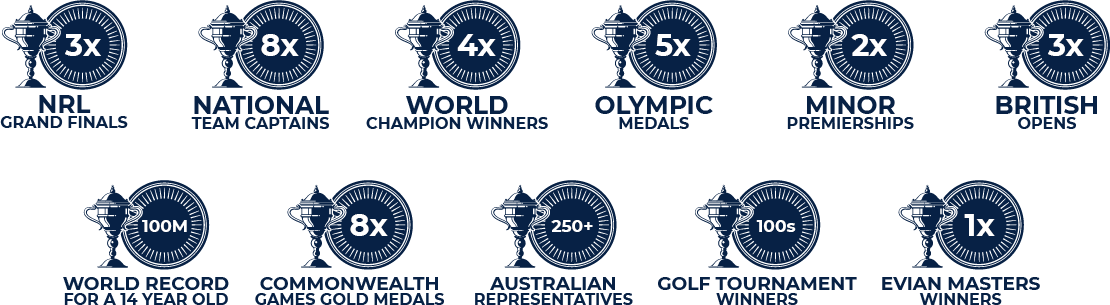
While Working with John, his athletes achieved:
Frequently Asked Questions
How can mindset coaching help a competitive gymnast?
A: Gymnastics mindset coaching addresses the specific mental challenges of a sport that demands perfect execution of complex, physically risky skills under intense judged competition pressure. The most common issue is the training-to-competition gap – gymnasts who perform skills reliably in the gym that become inconsistent in competition. John Novak works with gymnasts on the mental conditions that allow automatic execution, the competition preparation routines that reproduce training confidence, and the recovery protocols for handling falls and errors mid-routine.
How do gymnasts deal with fear of difficult skills?
A: Fear of difficult skills in gymnastics is a genuine and rational response: these are physically risky movements, and the body is appropriately cautious. John Novak’s approach to skill fear distinguishes between protective caution (which should be respected) and learned anxiety (which can be addressed). For learned anxiety around skills that are technically within the athlete’s capacity, he uses a progressive desensitisation approach combined with confidence anchoring: systematically rebuilding the automatic, comfortable execution of the skill in a controlled progression.
What mental skills do gymnasts need for competition?
A: Gymnasts need four core mental skills for competition performance: automatic execution (the ability to let skills run without conscious monitoring), pre-routine composure (the ability to arrive at the apparatus in the ideal mental state), fall recovery (the ability to continue a routine with full commitment after an error), and artistry (genuine expression rather than cautious survival). John Novak works with gymnasts on all four dimensions, building them systematically through competition simulation and targeted mental skills training.
How do judges' scores affect gymnasts' mental state?
A: Score awareness is one of the most disruptive mental influences in gymnastics – knowing a low score is needed, or that a competitor has just posted a high one, creates outcome pressure that interferes with execution. John Novak works with gymnasts on score compartmentalisation: the mental discipline of focusing entirely on the quality of execution rather than the number that will result from it. This is built through practice environments that deliberately decouple performance quality from numerical feedback.
Can mindset coaching help young gymnasts?
A: Yes and it is particularly valuable at junior level because the mental skills built early in gymnastics carry through the entire athletic career. John Novak has worked with gymnasts from developmental squad level through to national representation. For young gymnasts, the focus is on building genuine confidence, healthy competitive attitudes, the ability to enjoy the challenge of difficult skills, and the resilience to continue developing after falls and setbacks. Young gymnasts with strong mental foundations progress faster and stay in the sport longer.
Does John Novak offer online gymnastics mindset coaching?
A: Yes. John Novak provides online gymnastics mindset coaching to athletes across Australia and worldwide via Zoom or video call. All aspects of his gymnastics program: pre-competition preparation, automatic execution training, visualisation, and the Boomerang Effect framework can be delivered effectively online. Gymnasts and aerobics athletes in all Australian states, as well as internationally, work with John through online sessions aligned to their competition calendars.

JOIN
The Ultimate Mindset Gym for Rapid Sporting Success

SHOP
Instant access to Mindset resources and eBooks Purchase Athletes Gear Join Events-live Workshops and Webinars

BOOK NOW
Book a Session for you or your Team